JIM CARROLLFUTURIST / TECHNOLOGY / INNOVATION
A customized technology keynote by futurist Jim Carroll

AFTER AI.

What Comes Next When Intelligence Becomes Infrastructure

AI isn’t the destination. It’s the accelerant.

Customize this keynote
The bigger technology conversation

WHAT HAPPENS
WHEN AI BECOMES
ASSUMED?

“After AI” asks what comes next as intelligence becomes part of the systems we use, the products we build and the industries we lead.

For several years, the conversation has focused on models, copilots, prompts and automation. The next strategic question reaches further: what happens when those capabilities accelerate engineering, science, computing, robotics and infrastructure at the same time?

Chips give intelligence a place to operate. Robots give it a physical presence. Simulation changes how products are designed. Energy and supply chains determine what can scale. Scientific discovery opens possibilities that yesterday’s business plan never considered.

Jim Carroll brings these developments into one strategic context, connecting the technology to your customers, competitors, workforce and decisions.
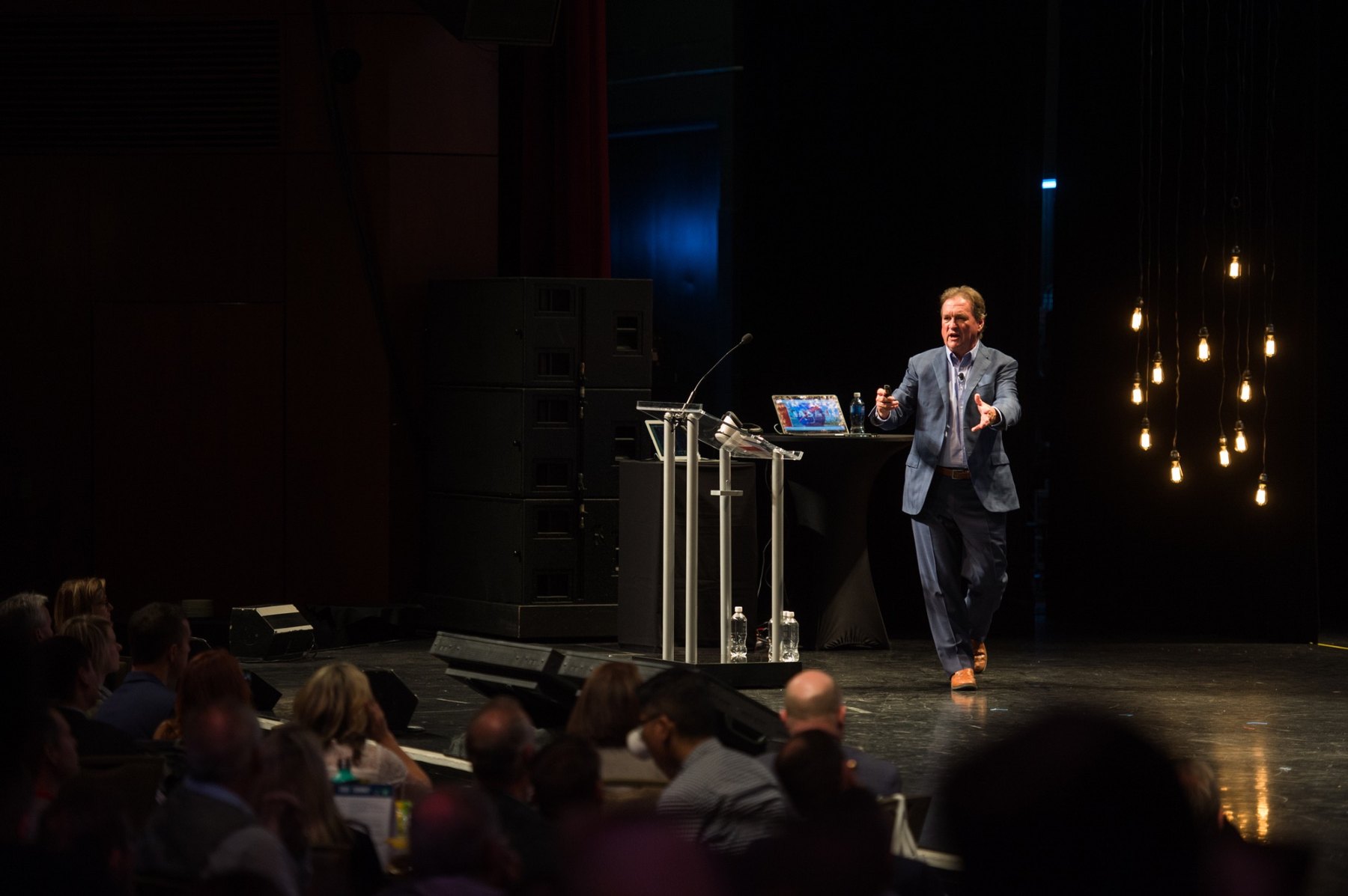
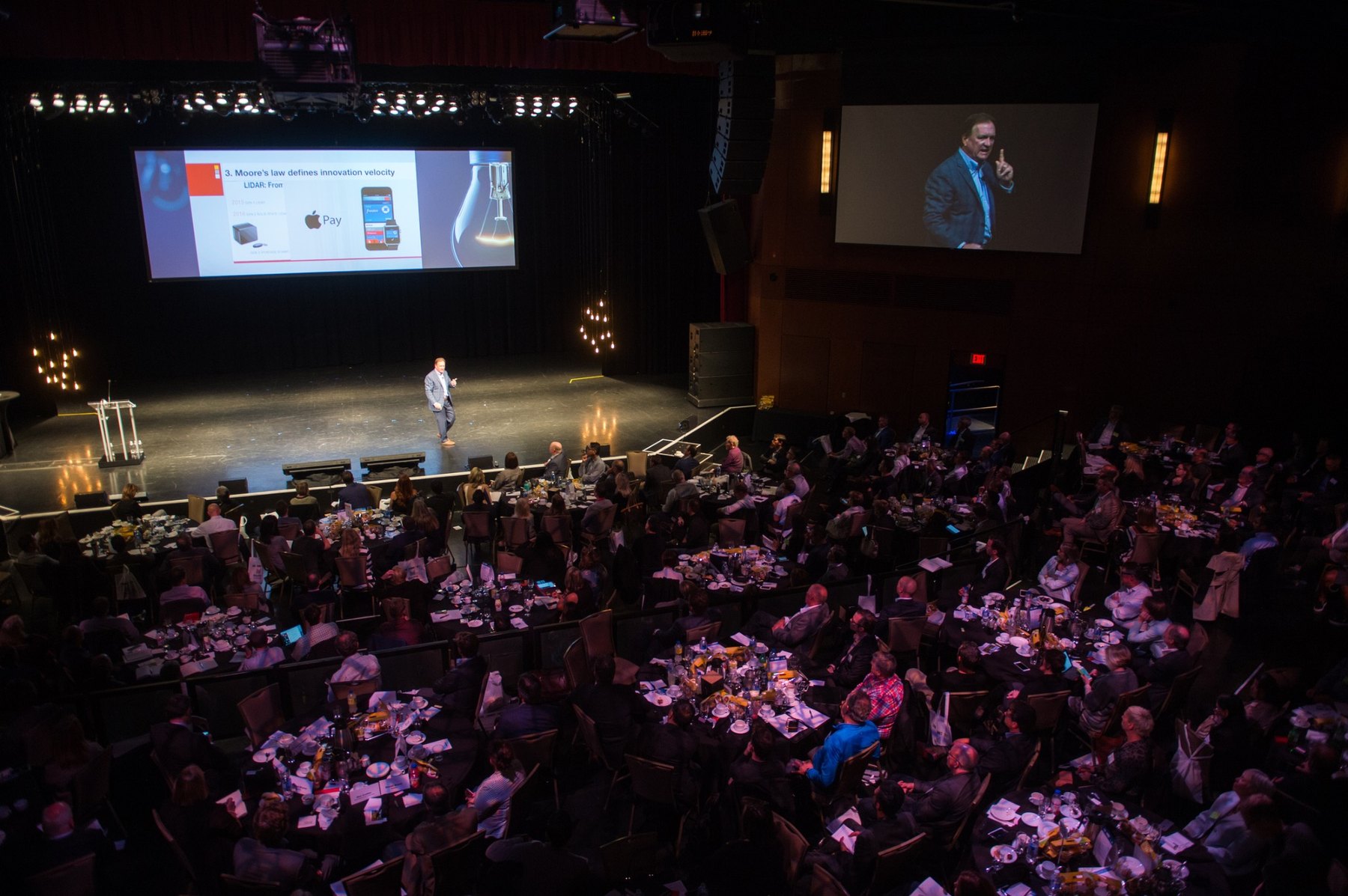
Jim Carroll delivering a keynote to a conference audience
Technology insight built for the people in the room.
The keynote premise

TECHNOLOGY
ACCELERATES
EVERYTHING ELSE.

An AI-enabled design process can affect far more than the productivity of the designer.

Faster prototyping can change a product roadmap. A shorter roadmap can alter supplier requirements. New suppliers can change the competitive landscape. New capabilities can change what customers expect.

That is the story of this keynote: the consequences that follow when developments begin accelerating one another.

Jim explores the second- and third-order effects—the changes in skills, infrastructure, product lifecycles and business models that are easily missed when attention stays on a single technology.

The opportunity is to see the connections before they become everyone else’s assumptions.

Ten forces / One interconnected story

THE NEXT
TECHNOLOGY AGENDA.

The mix is tailored to your industry. Each force is explored through its practical implications, constraints and timing.

01

AI becomes infrastructure

Intelligence becomes embedded in software, services and workflows. The question shifts toward how an organization operates when these capabilities are readily available.

Where does your advantage come from when competitors can access similar tools?

02

Intelligence moves to the edge

AI capabilities move into devices, vehicles, equipment and industrial systems. Local processing changes the possibilities for responsiveness, privacy and operation beyond a constant cloud connection.

Which products become more valuable when intelligence is built into them?

03

Robotics makes intelligence physical

Machine vision, cobots, humanoid systems and autonomy connect software capabilities to physical tasks. Deployment depends on economics, reliability, safety and the realities of the workplace.

Where does the capability cross from impressive demonstration to useful deployment?

04

Agents change the development cycle

Agents can assist with research, coding, engineering and coordinated workflows. The opportunity includes redesigning how work flows, with verification and accountability built into the process.

What happens to your product cycle when parts of development become faster?

05

Science becomes more computational

Simulation and machine intelligence help researchers explore materials, biological systems and engineering possibilities. Faster discovery can alter the opportunity horizon for multiple industries.

What would change if a breakthrough arrived earlier than your planning model assumes?

06

The physical world becomes computational

Sensors, digital twins and connected systems create new ways to understand and manage assets. Feedback from real operation can influence design, service and performance.

When does a physical product become an ongoing software and service relationship?

07

Compute meets energy

Intelligence requires physical capacity: semiconductors, data centres, electricity, cooling and grid connections. Infrastructure can determine the location, pace and economics of growth.

Does your strategy account for the capacity needed to make it real?

08

Geopolitics reshapes technology supply

Chips, materials, tariffs, defense requirements and manufacturing policy interact with sourcing decisions. Resilience and access become part of the technology strategy.

Which supply-chain assumptions need to be reconsidered?

09

Skills and judgment become strategic

Faster technology cycles create continuing learning demands. Leaders need the ability to evaluate outputs, establish guardrails and make decisions when information is abundant and certainty is scarce.

Can your organization learn and exercise judgment at the pace its tools enable?

10

The next computing horizon keeps moving

Quantum and emerging architectures challenge longer-term assumptions about security, simulation and optimization. Technologies such as blockchain may also find practical roles after their first hype cycle.

How do you distinguish a useful application from an exciting narrative?

The acceleration stack

THE CONNECTIONS
CHANGE THE
TIMETABLE.

AI needs compute. Compute needs chips and electricity. AI can also help design chips, explore materials and optimize infrastructure.

Those advances can create capacity for further innovation. Edge intelligence expands what machines can do. Robotics changes manufacturing. Manufacturing changes requirements for skills, components and supply chains.

The result is a set of feedback loops. A breakthrough in one area can remove a constraint somewhere else—or create a new bottleneck.

Jim makes this system understandable, then connects it to the strategic choices facing your audience.

Explore the broader trend perspective
The leadership reality

THE
INFINITE PIVOT.

The next transition begins before the last one is finished.

Cloud strategies continue evolving while agents change software. Robotics develops while supply chains reorganize. Compute demand expands while energy infrastructure works to keep up.

Leaders are managing several transitions at once, each with its own economics, constraints and uncertainty.

The keynote connects this reality to a practical response: revisit assumptions, focus experiments, build skills and identify the signals that justify moving faster.

The biggest risk is that the future happens faster than your mental model.

That is why timing matters. A development may be real while its adoption remains uneven. A capability may be ready while the infrastructure or economics still need to catch up. Jim explores those distinctions.

A current example / Electronic Components Industry Association

WHAT’S AFTER AI
FOR THE PEOPLE
BUILDING IT?

The ECIA keynote brings this perspective to the authorized electronic-components channel—an audience already immersed in technology.

For that room, the questions connect directly to robotics deployment, AI silicon at the edge, defense electronics, energy infrastructure and faster design cycles.

Tariffs, geopolitical realignment and skills pressures change the conditions in which those opportunities develop.

The focus is the channel’s next move: where demand may shift, how customer requirements can change and which assumptions about products, sourcing and timing deserve another look.

A different industry gets a different application of the same strategic perspective. A utility, a manufacturer and a financial-services organization each face a distinct set of consequences.

A trusted technology-event partner

EXPERIENCE
THAT REACHES
YOUR ROOM.

Customer conferences, user events, partner meetings, roadshows and executive leadership sessions.

SAP

40+ bookings

SAP has booked Jim more than 40 times for customer events. Repeat engagements reflect a sustained relationship built around relevant insight for the audience.

Explore the SAP case study
Microsoft Canada

2,000+ executives and IT professionals

An opening keynote connected AI, robotics, IoT, augmented reality and industry virtualization in one strategic story.

Explore the Microsoft case study
Across industries

Technology in context

From Hitachi Vantara’s CIO and CFO audience to manufacturing events, Jim connects technological change to the business and industry in the room.

See more client engagements

Jim’s technology client work has also included Cisco, IBM, HP, Gemalto and others, across formats including multi-city roadshows.

Audience takeaways

SEE MORE CLEARLY.
DECIDE MORE
DELIBERATELY.

Recognize convergence

Understand how intelligence, compute, science, robotics and infrastructure interact.

Test the timetable

Question assumptions about when capability, economics and adoption might change.

Find the consequences

Look beyond a productivity improvement to its effects on products, services and competition.

Identify constraints

Recognize the skills, energy, safety, verification and supply-chain requirements that shape progress.

Separate signal from hype

Evaluate useful applications while keeping uncertainty and uneven adoption in view.

Build an action agenda

Choose focused experiments and the evidence that would justify scaling them.

How leaders respond

THINK BIG.

Challenge the mental model. Look beyond today’s tools to what they enable next. Explore connections and opportunities beyond the current roadmap.

START SMALL.

Run focused experiments with clear purposes and guardrails. Build skills, test assumptions and learn where value is real.

SCALE FAST.

When the evidence supports it, turn successful experiments into meaningful capability. Update the organization as the opportunity develops.

Customization

ONE STRATEGIC FRAME.
YOUR INDUSTRY’S
SPECIFIC FUTURE.

Every keynote begins with your audience and the decisions that matter to it.

Technology customer events

Help customers understand the world your technology enables, and the implications for their own industries.

Partner and channel meetings

Explore changing demand, customer requirements, product cycles and new opportunities for value.

CIOs and CTOs

Connect infrastructure and technology choices to business models, capacity and strategic priorities.

Executive leadership teams

Build a shared view of overlapping disruption and identify assumptions worth challenging.

Industry associations

Make the technology agenda specific to members’ products, markets, skills and growth opportunities.

Sales and user conferences

Give the audience a broader context for the capabilities, customer conversations and changes ahead.

Preparation considers your industry, customers, competitors, regulatory environment, business model and strategic challenges. Jim adapts the examples, emphasis and action questions to the room.

For event planners

THE KEYNOTE
AT A GLANCE.

After AI: What Comes Next When Intelligence Becomes Infrastructure

Artificial intelligence is becoming an enabling layer throughout computing, products, science and the physical world. Futurist Jim Carroll explores what comes next as AI accelerates robotics, engineering, discovery and infrastructure—and those developments begin accelerating one another.

This customized keynote connects emerging technologies to the changing assumptions around customers, competition, skills, supply chains and business models. Audiences gain a clearer view of the opportunities and constraints, with a practical response built around Think Big, Start Small, Scale Fast.

How is this different from an AI keynote?

The focus is what AI enables across the wider technology system, and what those connections mean for your industry. Agents and models form part of a larger story involving chips, machines, science, energy and leadership.

Can the content be tailored to our industry?

Yes. Research and pre-event discussion shape the examples, technology mix and strategic questions. The ECIA channel perspective is one example; your organization’s brief determines yours.

How do we discuss the format?

Contact Jim with your event, audience and goals. The conversation can address the keynote’s emphasis, session length, Q&A and other requirements.

Jim Carroll speaking to a large conference audience
Your next event

WHAT DOES
AFTER AI MEAN
FOR YOU?

Bring a researched, relevant technology perspective to your customer conference, industry event or leadership meeting.

Researched. Relevant. Actionable.